Antique Phonograph Collecting: Common Questions for New Collectors
Most people arrive at antique phonograph collecting the same way: a machine turns up in a family estate, at an auction, or in the corner of a shop. These are the questions new collectors in Wisconsin, Illinois, and the wider Midwest ask us most often.
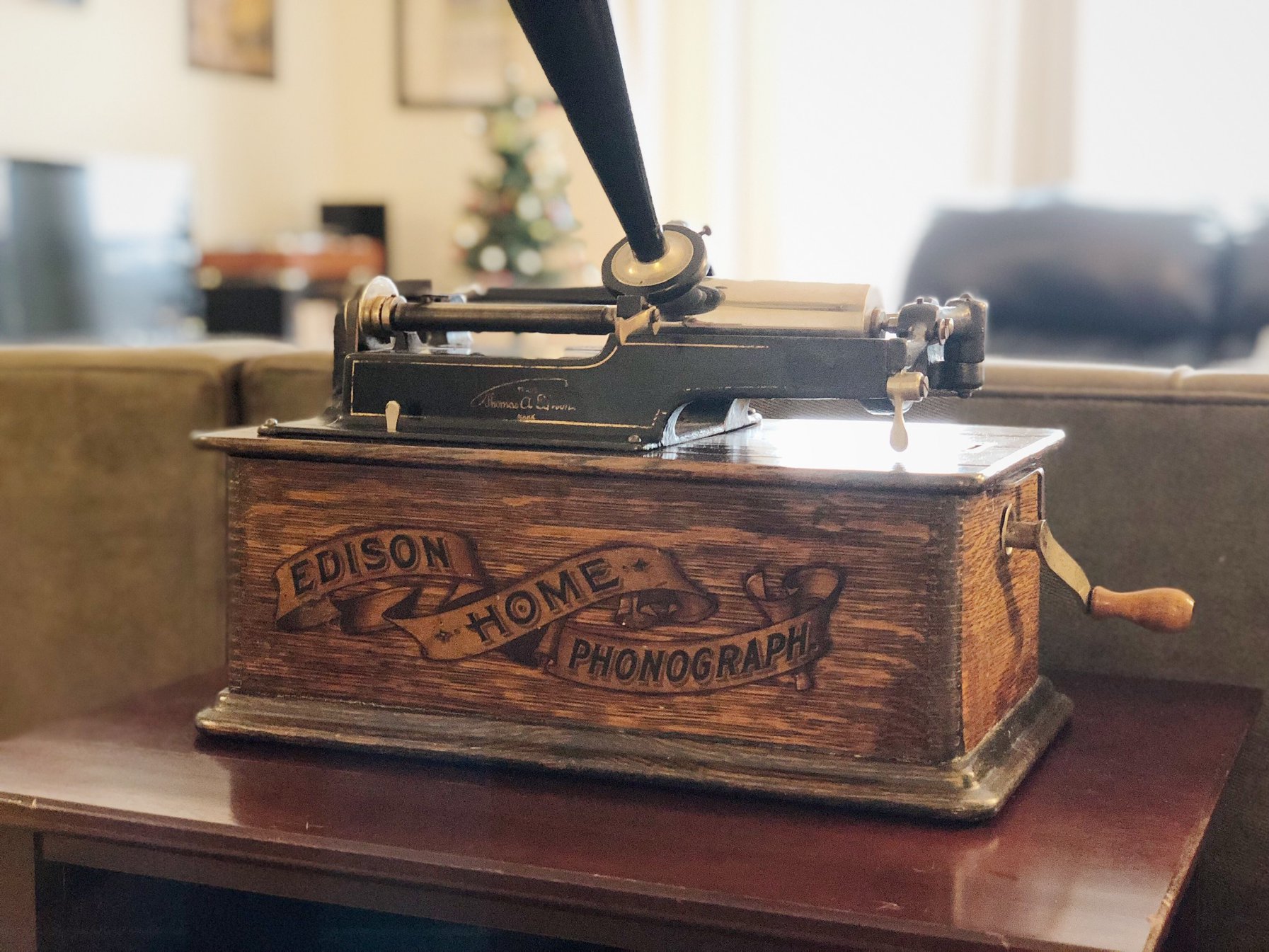
Draft answer — written by WIMAPS volunteers for general guidance and open to revision. Nothing here is an appraisal.
What is the difference between a phonograph, a gramophone, and a Victrola?
Phonograph is typically the broadest term to cover cylinder machines and disc machines of just about any variety. Gramophone is a term typically referring to Emile Berliner’s disc machine, but most collectors will still mostly use “phonograph” instead. Victrola is a Victor brand name for internal-horn disc machines, and is still covered by the term “phonograph.”
I just inherited a machine. What should I do first?
Do as little as possible at first. Photograph the machine exactly as you found it, including any decals, plates, model numbers, and serial numbers. Those photos are the single most useful thing you can bring to a collector for identification.
Resist the urge to clean, polish, oil, or repaint anything. Old finish and original decals are a large part of what collectors value, and a well-meaning afternoon with furniture polish can undo a century of survival. Keep the machine somewhere dry and temperature-stable, and keep any loose parts together in a labeled box.
Is it safe to wind it up and play it?
Sometimes, but not automatically. A mainspring that has sat for decades can be brittle, lubricant can harden into varnish, and a reproducer with a shrunken gasket can chew a record instead of tracking it. None of that is visible from the outside.
The safest path is to have someone experienced look the machine over first, and to practice on a common, damaged record rather than the rarest thing in the box.
Do cylinder records still play?
Many do. Condition matters more than age: early wax cylinders are soft, prone to cracking, and can be permanently ruined by mold, while later celluloid cylinders are noticeably more durable. Store cylinders upright in their boxes, away from damp basements and hot attics.
Just as important, make sure the machine and the record match — especially “2m” vs “4m”. 2-minute cylinders require a 2m reproducer and gearing, while 4-minute cylinders require a 4m reproducer and gearing. Using the wrong type will certainly not sound good, and may damage the record.
How much space and money does the hobby take?
Less than people expect, at least to start. Plenty of members keep a single tabletop machine and a shelf of records. Others need a dedicated room for horn machines, cabinets, and cranes. Both are normal.
We deliberately do not publish price guidance — the market moves and condition drives everything. What we can say is that the club itself costs nothing to join.
Still have a question? Contact WIMAPS and a member will help.